

Why electricity bills are high in Singapore commercial buildings (even when nothing has changed)
24/04/2026
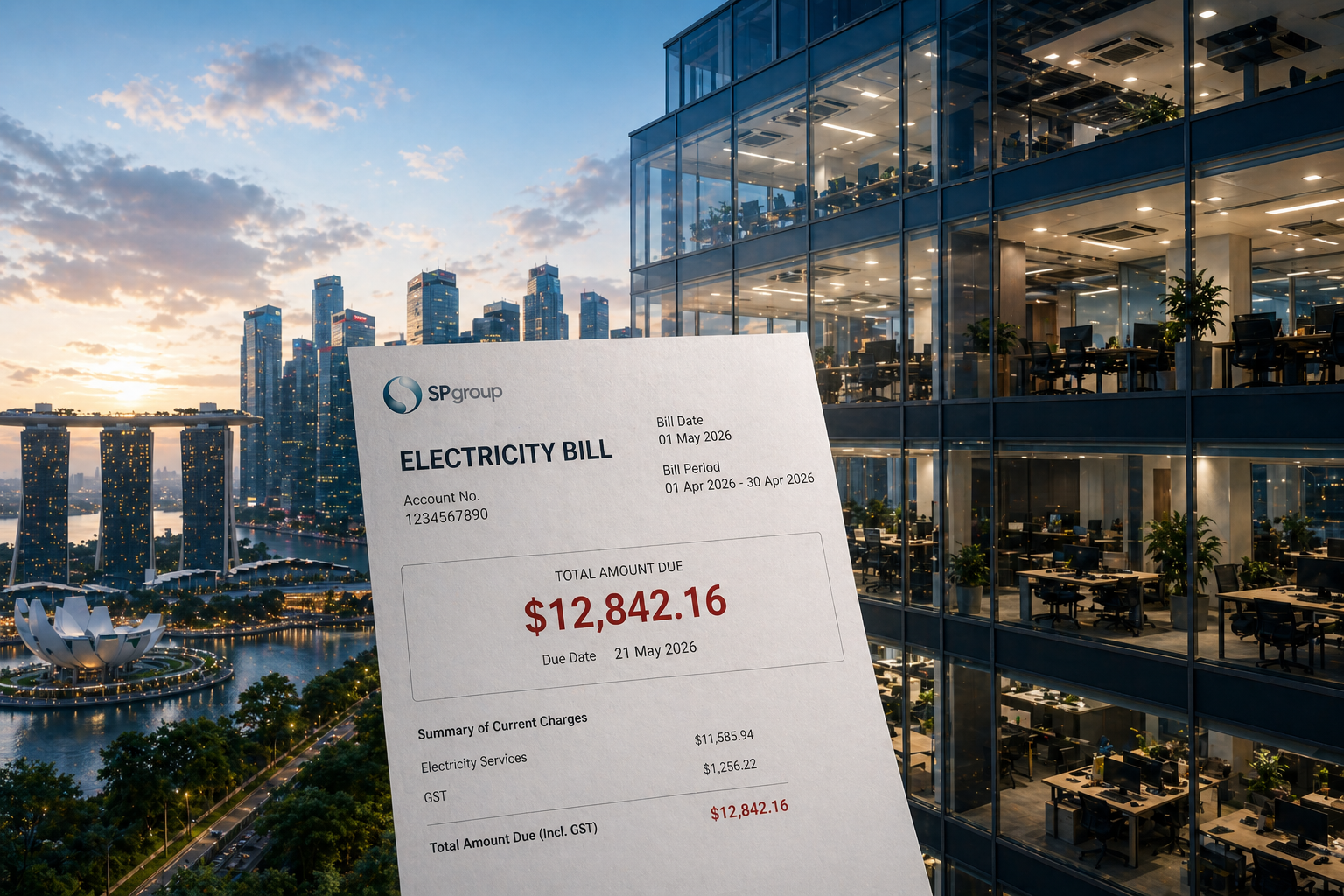
If your electricity bill has been increasing despite no changes in operations, you’re not imagining it. Across offices, commercial buildings, and SMEs in Singapore, many businesses are facing the same issue—stable usage patterns, consistent occupancy, and no major equipment upgrades, yet electricity costs continue to rise month after month.
This often leads to a frustrating and very common question: why is my electricity bill so high when nothing has changed?
While part of the answer lies in rising electricity prices in Singapore, that alone does not explain the full picture. In reality, the biggest drivers of high electricity bills in commercial buildings are often internal, hidden within daily operations, and difficult to detect without proper visibility. Understanding these underlying causes is the first step toward making sense of your energy costs.
The real reason: most businesses lack visibility into energy usage
In many commercial buildings, high electricity costs are not caused by a single major issue, but by a combination of small inefficiencies that accumulate over time. The challenge is that these inefficiencies are rarely visible.
Your monthly utility bill typically provides a total electricity consumption figure, but it does not show which systems are responsible, when energy usage peaks, or where waste is occurring. Without this level of detail, businesses are left guessing. As a result, many energy-saving initiatives are based on assumptions rather than actual data, which explains why they often fail to reduce electricity costs in a meaningful way.
This lack of visibility is one of the most overlooked reasons why electricity bills remain high, even when organisations believe they are already managing energy usage carefully.
Where electricity goes in a Singapore commercial building?
To understand why electricity bills are high, it is important to first look at how energy is typically distributed within a commercial building in Singapore. While exact figures vary depending on building type and operations, the overall pattern is remarkably consistent.
Air-conditioning and HVAC systems are usually the largest contributor, often accounting for up to 50 percent of total electricity consumption. This includes cooling, ventilation, and chilled water systems that run throughout the day, and in many cases, beyond actual occupancy hours.
Equipment and plug loads—such as office devices, servers, and operational machinery—generally make up around a quarter of total consumption. Lighting systems, even with widespread LED adoption, still contribute a noticeable share, typically between 10 and 17 percent. The remaining energy usage comes from other building systems such as lifts, pumps, and auxiliary infrastructure.
This breakdown highlights an important insight: focusing on smaller contributors like lighting alone will rarely lead to significant cost reduction if the largest driver—HVAC—remains inefficient.
The hidden causes of high electricity bills in commercial buildings
In practice, high electricity bills are rarely the result of obvious errors. Instead, they are driven by recurring operational inefficiencies that are easy to overlook.
One of the most common issues is HVAC systems running outside of actual operating hours. Many Building Management System (BMS) schedules are configured at the start of tenancy and are not updated as business operations evolve. As hybrid work arrangements become more common, buildings are often no longer fully occupied during traditional hours, yet cooling systems continue to run as if they are. This leads to unnecessary energy consumption that accumulates daily.
Another frequent issue is overcooling caused by airflow imbalances rather than actual temperature needs. When certain areas of an office feel warmer due to poor air distribution, occupants often lower the thermostat across the entire space. This forces the system to work harder without addressing the root cause, increasing electricity usage without improving comfort.
Lighting inefficiencies also contribute, particularly in shared or low-occupancy areas such as meeting rooms and corridors. Even with energy-efficient lighting, extended operating hours can lead to unnecessary consumption over time.
In addition, standby power—often referred to as “phantom load”—plays a larger role than many realise. Devices that appear to be switched off can continue drawing electricity in the background. Across an entire office environment, this seemingly minor consumption can add up to a meaningful portion of the monthly bill.
Why rising electricity prices make the impact more visible?
The impact of these inefficiencies becomes significantly more pronounced as electricity prices increase. Singapore’s electricity tariffs are influenced by global energy markets, including fuel prices and supply constraints, which means that businesses are exposed to external cost pressures even if their usage remains unchanged.
For a deeper understanding of these external factors, you can read: why electricity prices are rising in Singapore
The key point is that rising electricity prices do not create inefficiencies—they amplify them. What may have previously gone unnoticed as a small cost now becomes clearly visible in your monthly electricity bill.
Why energy-saving efforts often fail to reduce electricity costs?
Many businesses take proactive steps to reduce electricity consumption, yet still see little improvement in their bills. This is often due to a mismatch between effort and impact.
In many cases, organisations focus on visible and easy-to-implement actions such as turning off lights or encouraging employees to power down devices. While these actions are beneficial, they typically address only a small portion of total energy usage. If HVAC systems account for the majority of consumption, then improvements in other areas will have limited overall effect.
Another challenge is the lack of data-driven decision-making. Without clear insights into which systems consume the most energy and when usage peaks, it is difficult to prioritise the right actions. As a result, efforts become fragmented and inconsistent.
Finally, energy management is often treated as a one-time initiative rather than an ongoing process. In reality, both energy usage patterns and electricity prices change over time, which means optimisation must be continuous to remain effective.
Why your electricity bill can increase without any operational changes
A common misconception is that electricity costs only increase when usage increases. In reality, this is not always the case.
Electricity bills can rise even when operations remain unchanged due to factors such as higher tariff rates, increased peak-hour costs, and inefficiencies becoming more expensive under rising energy prices. In some cases, systems may also be running longer or operating less efficiently without being immediately noticeable.
If you are experiencing a sudden increase in your electricity bill, it is worth exploring both external factors and internal inefficiencies together. For more context, read: why your electricity bill suddenly increased
The key insight: high electricity bills are often a visibility problem
At its core, the issue is not simply high energy usage, but a lack of clarity around where and how that energy is being consumed.
Without visibility into system-level consumption, businesses cannot accurately identify inefficiencies or measure the impact of changes. This makes it difficult to move from general awareness to targeted action.
In other words, reducing electricity cost is not just about doing more—it is about understanding more.
What this means for businesses looking to reduce electricity costs
Before implementing additional energy-saving measures, the most effective next step is to build a clear understanding of your current energy usage. This involves identifying which systems are driving costs, when energy is being used, and where inefficiencies are occurring.
Once this foundation is established, businesses can prioritise actions that deliver the greatest impact, rather than relying on broad or generic strategies.
If your goal is to reduce electricity cost in a structured and measurable way, the next step is to explore how to optimise energy usage across your facility.
👉 Read next: how to reduce electricity cost in Singapore commercial buildings
Frequently Asked Questions About High Electricity Bills in Singapore
Why is my electricity bill so high in Singapore commercial buildings?
Electricity bills are often high due to a combination of rising electricity prices and internal inefficiencies such as HVAC overuse, poor scheduling, and hidden energy waste within building operations.
What uses the most electricity in a commercial building?
HVAC systems are typically the largest contributor, often accounting for up to 50 percent of total electricity consumption in Singapore commercial buildings.
Why did my electricity bill increase even though usage stayed the same?
This can happen due to higher electricity tariffs or inefficiencies becoming more costly over time, even if overall consumption has not changed.
How can I identify what is driving my electricity bill?
Identifying cost drivers requires visibility into system-level energy usage, including when energy is consumed and which systems contribute the most.
Is high electricity cost always due to inefficiency?
Not always. External factors such as rising energy prices also play a role, but inefficiencies determine how much of that increase affects your business.
energy and assets
